
Inground Pool Cost in Virginia: 2026 Price Guide & Factors
Inground pool cost is the first thing most Virginia homeowners want to understand before they ever schedule a consultation, and that instinct is the right one. Knowing what a pool actually costs in 2026, and which factors move the price up or down, helps you plan a realistic budget instead of being surprised halfway through. At The Virginia Pool Company, we publish transparent pricing because confident decisions start with clear information. This guide walks you through current pricing, the variables that matter most, and what families across Virginia can expect.
Here is what you will learn in this guide:
- 2026 price ranges: A breakdown of what fiberglass pools cost in Virginia this year.
- Cost factors: The specific variables, from site conditions to features, that determine where your number lands.
- Long-term value: How ongoing maintenance and home value factor into the true cost of pool ownership.
How Much Does an Inground Pool Cost in Virginia in 2026?
Most fiberglass pool installations in Virginia range from $85,000 to $150,000 or more, depending on size, features, site conditions, and surrounding patio or landscaping work. That figure reflects a fully finished backyard rather than a bare shell, which is why it sits above some of the national averages you may see online. The sections below explain how that range is built and why two homes a mile apart can receive different quotes.
What Is the Average Price Range for Each Pool Type?
The average price range depends heavily on the material you choose, with fiberglass, concrete, and vinyl liner pools each carrying a different cost structure in 2026. Fiberglass pools typically land in the middle on upfront price while delivering the lowest long-term maintenance, which is why so many busy Virginia families choose them. Concrete pools offer the most customization but climb fastest in both installation and lifetime upkeep, and vinyl liner pools start lower but require liner replacements every several years. Understanding these differences early helps you compare quotes accurately and avoid focusing only on the sticker price.
- Fiberglass pools: Generally the best balance of upfront cost and low maintenance, with a smooth gelcoat surface and installation timelines measured in weeks rather than months.
- Concrete (gunite) pools: The most customizable option, but they need acid washing every three to five years and resurfacing every ten to fifteen years.
- Vinyl liner pools: The lowest entry price, offset by liner replacements that typically run $4,000 to $8,000 every seven to fifteen years.
Why Does Inground Pool Cost Vary So Much in Virginia?
Inground pool cost varies because the final number reflects far more than the pool shell itself, including excavation, decking, fencing, electrical work, and permitting. A flat, easily accessible lot with sandy loam soil costs less to prepare than a sloped yard with rocky soil or tight equipment access. Local permitting rules, HOA requirements, and the scope of your patio and landscaping all push the total higher or lower. Because every Virginia property is different, the only reliable number comes from an on-site evaluation rather than a generic online calculator.
- Site conditions: Soil type, slope, and equipment access can swing excavation costs from a few hundred to several thousand dollars.
- Scope of finishes: Patios, retaining walls, and landscaping often add tens of thousands depending on the materials chosen.
- Local requirements: Permitting and HOA approvals in communities like Stafford, Henrico, and Chesterfield affect both cost and timeline.
5 Key Factors That Determine Your Inground Pool Cost
Several specific variables shape your final inground pool price, and understanding each one helps you build a budget that holds up from consultation to first swim. The five factors below are the ones that most consistently move the number for Virginia homeowners.
1. Pool Size and Shape
Pool size and shape are the single biggest drivers of cost, since a larger pool requires more excavation, more materials, and more water. A compact plunge pool or cocktail pool occupies less space and costs significantly less than a large family pool, while rectangular shapes tend to be more affordable than freeform or geometric designs with multiple curves. Most inground pools fall between 10 by 20 feet and 20 by 40 feet, with mid-sized models being the most common choice for Virginia backyards. Choosing a size that fits both your yard and your actual swimming habits is the easiest way to keep your budget in check.
- Square footage: Larger surface area increases material, excavation, and water costs proportionally.
- Shape complexity: Freeform and geometric shapes with curves cost more than simple rectangles.
- Depth: A deeper end for diving requires more excavation and water, raising the total.
2. Site Conditions and Excavation
Site conditions determine how difficult and expensive it is to dig and prepare your yard, and they can vary dramatically across Virginia. Soft loam soil with a balance of sand, silt, and clay is the easiest to excavate, while rocky terrain, high water tables, or steep slopes add labor and equipment costs. Limited access for excavation machinery is another common factor, especially on established suburban lots near Richmond and Fredericksburg where mature trees and fences narrow the work area. A thorough site evaluation catches these issues before they become budget surprises.
- Soil type: Rocky or clay-heavy soil costs more to excavate than soft loam.
- Yard slope: Sloped lots may require retaining walls or additional grading.
- Access: Tight side-yard access can require specialized equipment and more labor hours.
3. Features and Add-Ons
Features and add-ons can add anywhere from a few thousand dollars to $30,000 or more, depending on what you select. Tanning ledges, water features, automatic covers, heaters, and lighting all enhance the experience but each carries its own cost. One advantage of fiberglass pools is that many popular features, such as built-in steps, benches, and tanning ledges, are molded directly into the shell at no additional construction cost. With concrete and vinyl liner pools, those same features must be custom-built on site, which raises the total considerably.
- Heating: A pool heater averages around $5,000 installed and extends your usable swim season.
- Automatic cover: Adds convenience, safety, and energy savings but increases upfront cost.
- Water features: Cascades, deck jets, and spillover spas add visual appeal and additional expense.
4. Decking and Landscaping
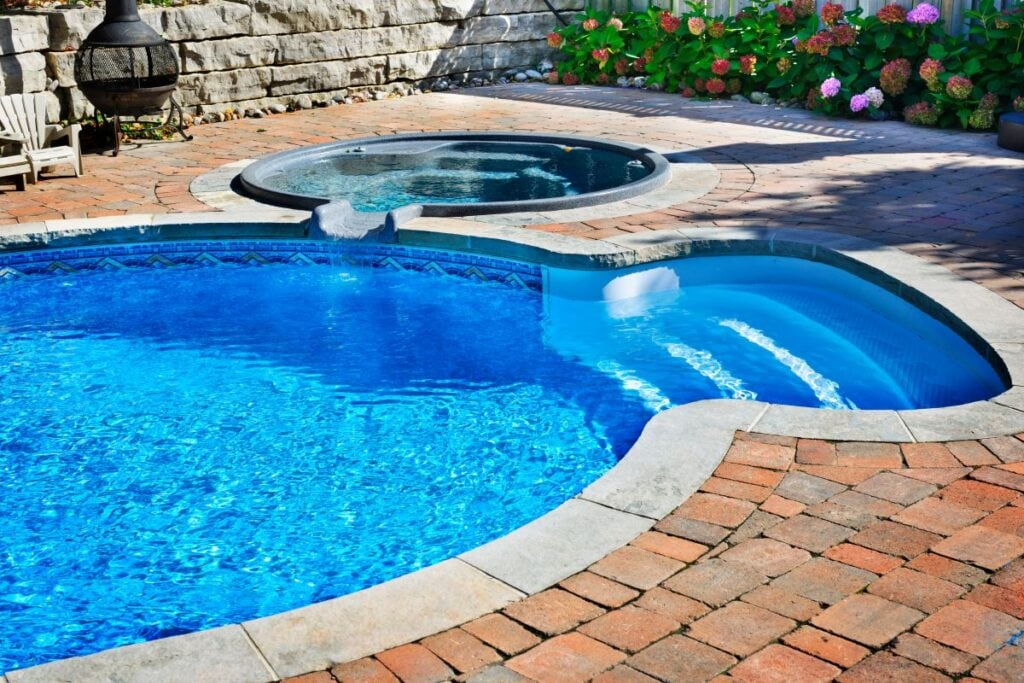
Decking and landscaping often represent one of the largest line items beyond the pool itself, and they shape how your finished backyard looks and functions. A 20 by 20 patio can range from $2,000 to $14,000 depending on whether you choose poured concrete, pavers, or natural stone, and larger surrounds cost more. Fencing is another required expense in most Virginia municipalities, with safety barrier fencing typically running $10 to $45 per linear foot. Investing in quality decking and landscaping turns a pool into a complete outdoor living space rather than just a place to swim.
- Patio material: Pavers and natural stone cost more than basic poured concrete but last longer and look better.
- Safety fencing: Most localities require four to five foot barrier fencing around new pools.
- Landscaping: Plantings, lighting, and grading complete the space and add to the total.
5. Permits and HOA Approvals
Permits and HOA approvals add both cost and time to your pool plan, and skipping them is never an option in Virginia. Building permits for a pool typically cost between $100 and $300, but the bigger consideration is the time and documentation involved in securing approvals. Many Virginia communities have HOA architectural review requirements that dictate fencing, setbacks, and equipment placement. Working with a builder who knows local requirements in areas like Spotsylvania, Midlothian, and Glen Allen keeps the approval process smooth and prevents costly redesigns.
- Building permits: Generally $100 to $300, required by every Virginia municipality.
- HOA review: Architectural committees may dictate fencing style, setbacks, and screening.
- Inspections: Scheduled inspections during construction ensure code compliance and safety.
What Does It Cost to Maintain an Inground Pool in Virginia?
Maintenance is a real part of the true cost of pool ownership, and budgeting for it from the start prevents surprises down the road. Annual maintenance for an inground pool generally runs $1,200 to $5,000 depending on the pool type, size, and whether you handle upkeep yourself or hire a service. Fiberglass pools sit at the lower end of that range because their smooth, non-porous gelcoat surface resists algae and consumes fewer chemicals than concrete.
Beyond the upfront installation, a pool is also a long-term investment in your property. Installing an inground pool can increase a home’s value by an average of 5 to 7 percent, depending on location, pool type, and the local real estate market. For families who plan to stay in their home for many years and live where a pool will see regular use, that combination of lifestyle value and added home equity makes the investment easier to justify.
How Does Pool Type Affect Long-Term Maintenance Costs?
Pool type has a major influence on what you spend year after year, not just on installation day. Fiberglass pools require the least ongoing work, with lower chemical use and no resurfacing or liner replacements over their lifespan. Concrete pools demand the most attention, including acid washing every few years and full resurfacing roughly every decade, while vinyl liner pools need periodic liner replacement that adds thousands of dollars each cycle. Factoring these lifetime costs into your decision gives you a more accurate picture than comparing upfront prices alone.
- Fiberglass: Lowest chemical use, no resurfacing, and no liner replacement over the pool’s life.
- Concrete: Acid washing every three to five years and resurfacing every ten to fifteen years.
- Vinyl liner: Liner replacement every seven to fifteen years at $4,000 to $8,000 each time.
Frequently Asked Questions About Inground Pool Cost in Virginia
Below are quick, direct answers to the questions Virginia homeowners ask most often when researching pool pricing. These cover cost, timeline, financing, and value so you can plan with confidence.
How Much Does a Fiberglass Pool Cost in Virginia?
Most fiberglass pool installations in Virginia range from $85,000 to $150,000 or more. That total reflects a finished backyard including the pool, patio, and surrounding work rather than the shell alone. Your exact number depends on size, features, and site conditions.
How Long Does Inground Pool Installation Take?
Start times typically range from two to five months depending on the season and permitting. Once installation begins, most fiberglass pools are completed within six to eight weeks. Concrete pools take longer because the shell must cure between stages.
Can I Install an Inground Pool Myself to Save Money?
Inground pool installation is not a practical do-it-yourself job because it involves excavation, plumbing, electrical work, permitting, and precise leveling. Mistakes in any of these areas can be expensive to correct and may void manufacturer warranties. Hiring an experienced local installer protects both your investment and your warranty.
Does an Inground Pool Increase Home Value in Virginia?
An inground pool can increase home value by roughly 5 to 7 percent depending on location and the local market. The lifestyle benefit is the bigger return for most families, since pools deliver years of use and gatherings. Homes in desirable Virginia neighborhoods tend to see the strongest resale benefit.
How Can I Finance an Inground Pool?
Many homeowners finance a pool through a home equity line of credit, a cash-out refinance, or a pool-specific personal loan. Home equity products usually carry the lowest rates because they are secured against your home. A clear budget and a transparent quote make financing decisions much easier.
Why Are Fiberglass Pools Popular With Virginia Families?
Fiberglass pools combine faster installation, lower maintenance, and a smooth, comfortable surface that resists algae. Many features like steps and tanning ledges are built into the shell, reducing both cost and upkeep. These advantages make fiberglass a practical long-term choice for busy households.
Why Choose The Virginia Pool Company for Your Inground Pool
When it comes to understanding inground pool cost and getting genuine value for your investment, The Virginia Pool Company is the partner Virginia families trust. As Virginia’s most experienced fiberglass pool installer, a nationally recognized Top 50 builder, and a proud River Pools & Spas franchise, we have helped more than 2,000 families create backyards built for decades of memories. We start every conversation with honest pricing and realistic timelines, never a sales pitch, and back our work with a 5-year workmanship warranty and manufacturer warranties up to 30 years on the structure. You can even visit our Pool Park in Warsaw to walk four fully installed fiberglass pools and compare finishes in real sunlight before you decide. If you are ready to understand what an inground pool would cost for your specific property, reach out today to schedule a no-pressure consultation and get clear answers built around your home, your budget, and your family.

